

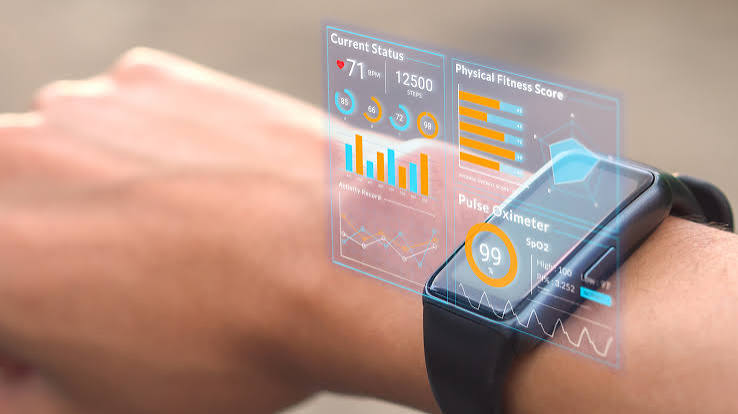
The Wearable Technology Evolution: From Pedometers to Health Platforms
The first generation of consumer wearable technology — the step counter and the basic fitness tracker — was built on a simple sensor and a simple insight: people are more motivated to be active when they can measure their activity. The step counter that provided a daily step count gave users a number to optimise and a feedback loop that changed behaviour. The commercial success of devices like the original Fitbit demonstrated that there was a large consumer market for quantified self data and that wearable form factors were acceptable to mainstream consumers in a way that earlier attempts at personal health technology had not been.
The wearable technology evolution that has most expanded the category’s value and the range of people who benefit from it: the addition of clinically meaningful health measurements to what had been primarily fitness-focused devices. The modern smartwatch that monitors heart rate continuously, measures blood oxygen saturation, detects atrial fibrillation with ECG capability, tracks sleep architecture including REM and deep sleep stages, and measures skin temperature for early illness detection is a genuinely different category of device from the step counter — and its potential impact on preventive healthcare and chronic disease management is proportionally greater.
What Modern Wearables Actually Measure
The physiological measurements that modern consumer wearables can now provide with sufficient accuracy to be clinically or behaviourally meaningful: heart rate (continuous optical heart rate measurement using photoplethysmography is now accurate enough for most health monitoring purposes outside of peak-intensity exercise), heart rate variability (the variation in time between heartbeats, which is a validated indicator of autonomic nervous system function and stress recovery that is increasingly used by performance-focused users for training load management), blood oxygen saturation (SpO2 measurement using optical sensors is available in most premium wearables, though accuracy limitations make it more useful for trend monitoring than for medical diagnosis), and sleep staging (the accelerometer and heart rate data combination that most wearables use for sleep staging has improved significantly but still lacks the precision of clinical polysomnography).
Smartwatches vs Fitness Trackers vs Health Bands
The wearable category distinctions that most matter for purchasing decisions: the smartwatch (a wrist device that runs a mobile operating system or proprietary OS and supports applications, notifications, and communication in addition to health and fitness tracking — the Apple Watch and Samsung Galaxy Watch being the most prominent examples), the fitness tracker (a more focused device that prioritises health and fitness data collection over smartwatch functionality, often in a slimmer form factor with longer battery life — the Fitbit Charge series and Garmin fitness trackers representing this category), and the dedicated performance tracker (a device specifically designed for athletes and serious fitness enthusiasts, with advanced training metrics, GPS accuracy, and durability that justify their premium price for their specific users).
The device category selection principle that most accurately guides consumer purchasing: the category whose primary strength matches the user’s primary use case. The user who wants to respond to messages from their wrist, control music, make calls, and get turn-by-turn navigation directions in addition to health tracking benefits most from the smartwatch; the user who primarily wants to improve their sleep, monitor their activity levels, and track their workouts without the complexity of a full smartwatch operating system benefits most from the fitness tracker; the competitive athlete who trains with heart rate zones, analyses power output, and needs precise GPS tracking benefits most from the dedicated performance tracker.
The Data Question: Privacy and the Value of Health Information
The wearable technology privacy consideration that most users accept without full awareness: the health data generated by continuous biometric monitoring is among the most sensitive personal data that exists. The resting heart rate trend that could reveal early signs of illness, the sleep quality data that reveals patterns of stress and recovery, the exercise data that reveals lifestyle habits — each of these data streams, in the hands of an insurance company, employer, or government, could have significant consequences for the individual. The wearable technology terms of service that govern how this data is stored, shared, and used deserve more careful reading than most users provide before accepting them.
The data security practice that most effectively protects wearable health data while maintaining its utility: choosing devices from manufacturers whose privacy policies explicitly commit to not selling health data to third parties, that store health data with encryption, and that provide clear data deletion mechanisms. The distinction between manufacturers who treat health data as a resource to be monetised and those who treat it as a trust relationship with the user has significant privacy implications that the device’s specification sheet does not address.
Emerging Wearable Categories Worth Watching
The wearable technology categories beyond the wrist that are showing the most promising early development: the continuous glucose monitor (CGM) that is beginning to transition from a medical device for diabetic patients to a wellness device for metabolic health optimisation — providing real-time blood glucose data that reveals how specific foods, exercise, and sleep affect metabolic function, smart rings that provide health monitoring in a more discreet form factor than the smartwatch and that have achieved impressive accuracy for sleep and recovery monitoring in a battery-efficient package, and smart glasses that embed computing capability and sensors into eyewear, enabling augmented reality overlays and hands-free information access.
The wearable technology development trajectory that most influences future device capability: the improvement of passive health monitoring that requires no user action. The wearable that can continuously monitor blood pressure without an inflatable cuff, detect blood glucose levels optically without skin penetration, and identify early biomarkers of cardiovascular disease through continuous monitoring of multiple physiological signals is the device that healthcare providers, insurers, and patients alike would find genuinely transformative — and the engineering challenges to achieving clinically accurate passive monitoring of these measurements are the primary technical obstacles that the most ambitious wearable development programmes are working to overcome.